

Story / Koko Ntuen
Images / Lana Shaw
Styling / Branden Ruiz
Hair / Danni Bee
Make-up / Kimora Mulan
Style Assistant / Mikaela Alvarado
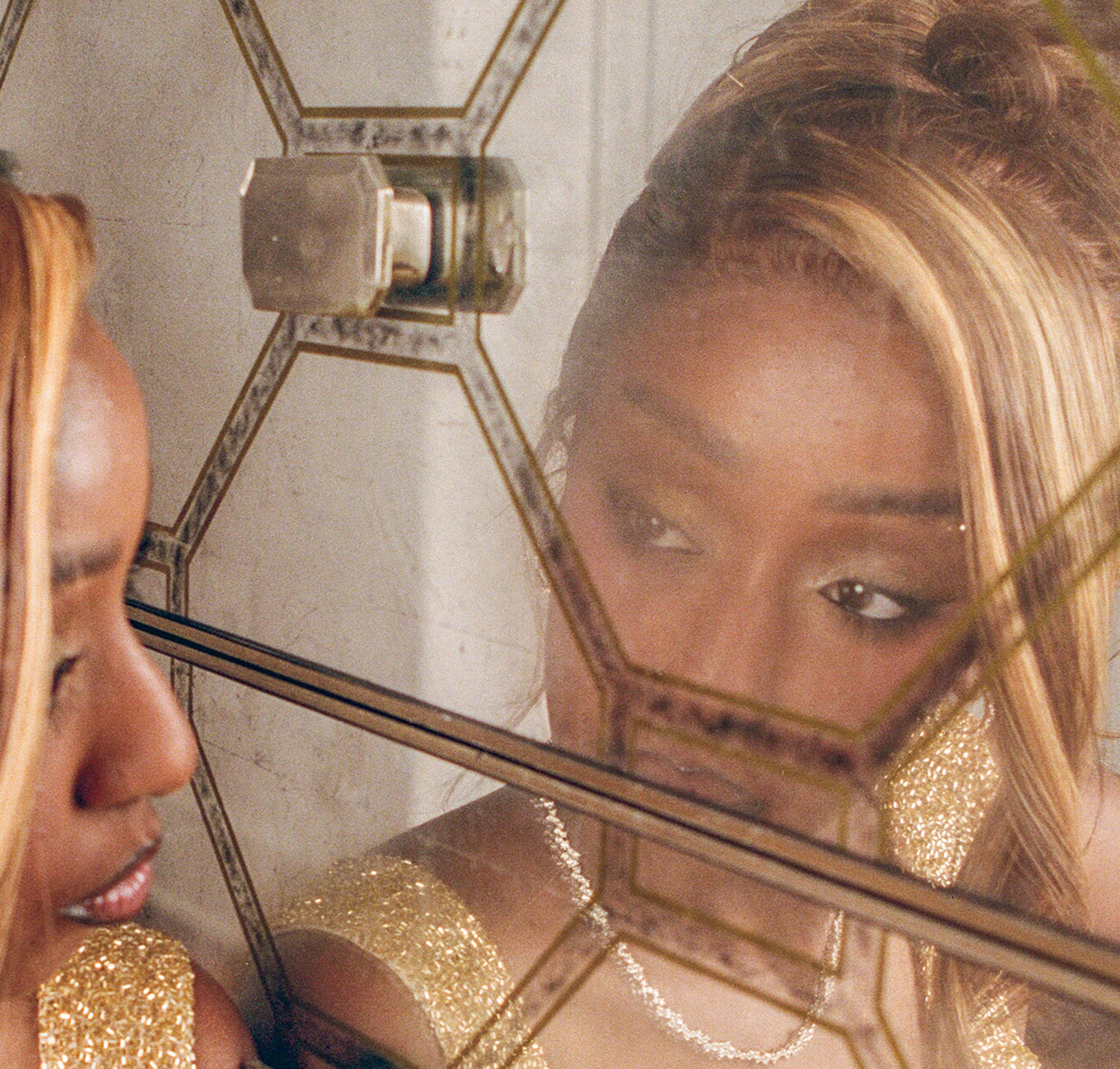
Costume: Songs of Siren Necklace, Earrings, Rings: Sydney Evan
Alemeda wakes up already mid-thought. There’s no warm-up, no performative ease. She’s trustworthy instantly about exhaustion, ambition, concern, anger, and the unusual strain of being an artist individuals are watching, however not watching sufficient.
“I’m undoubtedly on the hustle,” she admits. “Hustle, then sleep.”
That pressure between momentum and burnout, visibility and invisibility runs via every thing Alemeda does. It’s in her music, her posture, her voice, her dance. She’s a buzzy artist, booked, praised by critics and followers alike, but nonetheless working with the urgency of somebody who is aware of how rapidly consideration disappears. In a tradition obsessive about easy success, Alemeda is refreshingly direct in regards to the grind.
“Every thing, particularly proper now, folks’s consideration spans are so quick, and every thing is so saturated. I really feel like I’ve to always do one thing.”
That concern isn’t summary. It’s structural. Alemeda speaks overtly about what it means to be a Black girl making different, pop-leaning rock music in an business that also needs to file Black artists beneath R&B—whether or not it matches or not.
“Regardless of how good your music is, how good your branding is, it’s more durable,” she says plainly. “You need to work ten instances as exhausting. That’s simply the truth.”
She names it with out bitterness, but additionally with out apology. Alemeda is aware of the lineage she’s up towards—and the one she’s a part of. Artists like Santigold, Fefe Dobson, and different iconic girls of coloration who’ve damaged via into the mainstream rock-pop dialog didn’t achieve this simply. Even now, she factors out, white artists making “Black music” are sometimes fast-tracked in methods Black artists usually are not.
Alemeda remembers when she first leaned into storage pop, bed room pop, “no matter label folks needed to connect to it”, the speedy pushback that adopted. Earlier than she had even given an interview, after releasing her first few songs, writers started defining her for her. Critics would label her “the subsequent R&B artist,” citing influences she had by no means named and music she had by no means claimed.
“They’d say my music was impressed by somebody I’d by no means even listened to,” she says. “They’d by no means spoken to me or requested.”
As an alternative of letting it slide, Alemeda pushed again immediately. She tracked down writers, DM’d them, and corrected them for the document. “I’d inform them, respectfully, however that’s not what I used to be impressed by. These are the folks I used to be impressed by to make that music. These are my favourite artists.” As a rule, they might change it.
“That shit does have to alter,” she says. “If I’ve to be the aggressive one, the lady who places her foot down, I’ll do it.”
Alemeda’s music already does.
Her songs “Silly Little Bitch,” “Eat Me,” and others are loud, vulgar, tender, and diaristic. They really feel like unfiltered ideas you solely admit to your self, shouted right into a microphone with full conviction. There’s anger, sure, but additionally intimacy. A softness beneath the chaos.
“I’m an overtly unfavourable particular person,” she laughs, solely half joking. “Individuals need you to be optimistic on a regular basis, however that’s not actual. That’s not my life.”
What she affords as a substitute is honesty. Not prettified, not motivational, not palatable. Her music doesn’t resolve feelings; it acknowledges them. Every session, she says, is remedy. As soon as it’s written, she’s free.
“The second I write about it, I’m good. I transfer on. The sharing half is definitely the worst,” she admits. “There’s all the time somebody who’s going to say it’s trash. I don’t even give that vitality.”
What she does give vitality to now’s her debut album, one which leans even more durable into rock. Not as a dressing up, however as reclamation.
“Rock was stolen from Black folks,” she says. “What was thought-about rock again then can be known as R&B now.”
Alemeda is constructing her album with that historical past in thoughts, pulling from throughout eras and definitions, from Paramore to Aretha Franklin—understanding rock not as a style gatekept by whiteness, however as an emotional language rooted in Black expression.

Costume: Songs of Siren Necklace, Earrings, Rings: Sydney Evan Heels: Claudio Merazzi
“I need to contact all of the variations,” she says. “This album I’m engaged on is me understanding myself extra. I’m about to show 26. It’s frontal-lobe improvement,” she laughs. “However I don’t need to lose the core components of myself.”
These core components had been formed early. Alemeda is Ethiopian, raised by a deeply non secular mom whose personal life reads like a survival epic: born in a village with out electrical energy, subjected to feminine genital mutilation, married at 13, later escaping via a refugee lottery to the U.S. That historical past isn’t removed from Alemeda’s sense of function.
“After I acquired signed, it felt like I used to be dwelling my mother’s expertise—however my model,” she says. “She used to lie in a hut and inform folks she’d go to America someday. They known as her delusional.”
It’s in her blood and her smile…her delusion, she’s discovered, is commonly only a imaginative and prescient forward of its time.
Her path to TDE—High Dawg Leisure—was equally surreal. A DM. A buddy who understood the business earlier than she did. A final-minute flight utilizing airline advantages. Associates driving from Arizona. A studio assembly fueled by hope, not certainty.
“We had no thought what we had been doing,” she laughs. “We had been identical to—let’s go.”
4 months later, she was signed.
Now, Alemeda stands as one of many few girls on a label recognized for precision and endurance. She doesn’t take that frivolously, however she additionally doesn’t soften herself to suit it.
“I don’t need to change,” she says. “That is who I’m.”
And that’s precisely what makes her harmful—in one of the best ways.
Alemeda isn’t attempting to be digestible. She’s not right here to be categorized, comforted, or corrected. She’s right here to reclaim area, sound, and lineage—to be loud, tender, indignant, humorous, and deeply herself.
Rock and roll, in any case, was by no means meant to be well mannered.

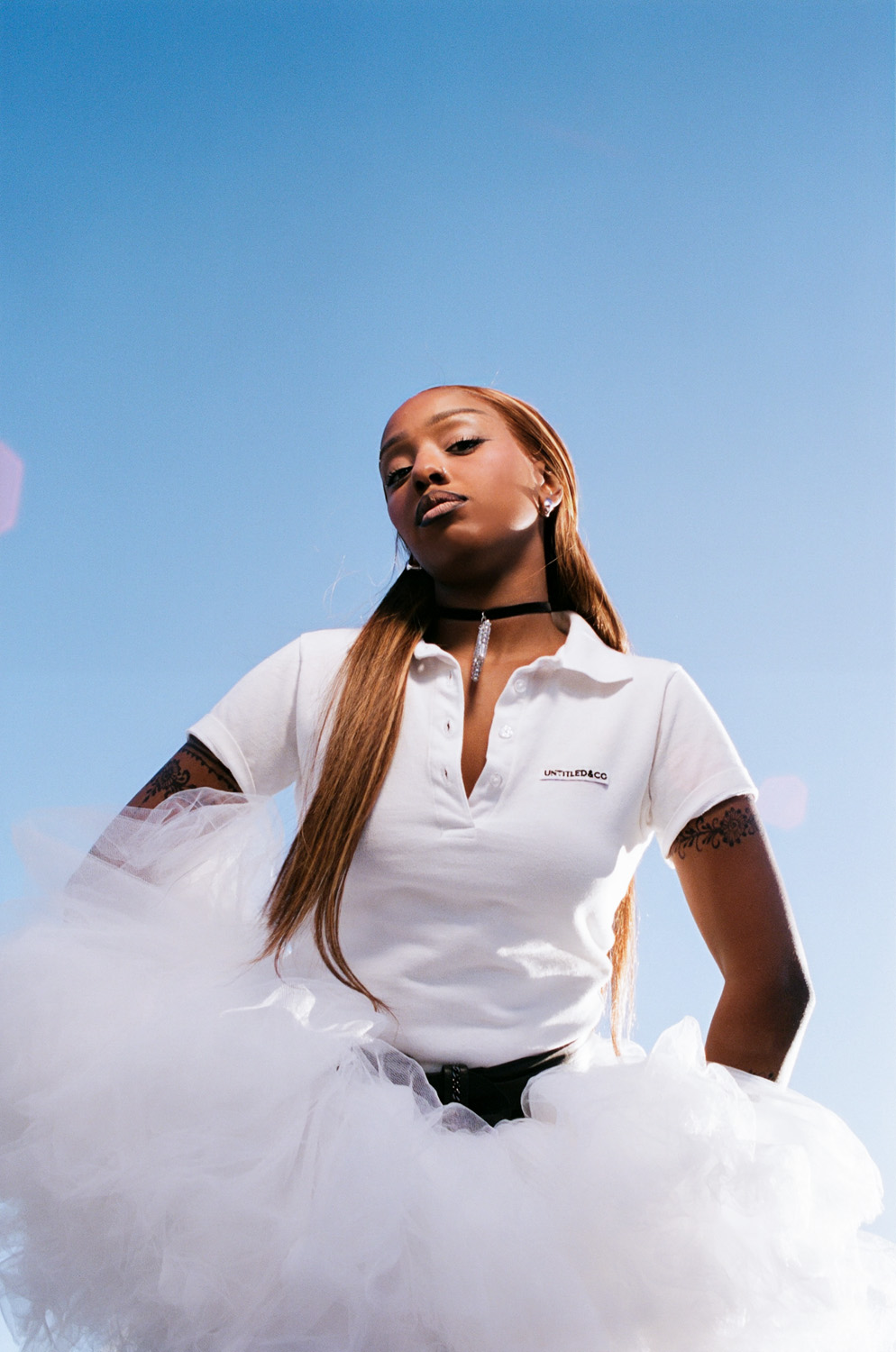
Tutu Costume: United and Co Tights: Falke Heels: Kurt Geiger Choker: Tarina Tarantino Belt and Bracelet: Streets Forward Earrings: LAGOMIST

Corset and Bikini High: Hardeman Bottoms: Sculptor Worldwide Bracelets: Streets Forward Boots: Hunter

Costume: Issey Miyake Tights: Falke Bracelets & Earrings: 8 Different Causes Heels: Claudio Merazzi
CONNECT WITH ALEMEDA
The put up ALEMEDA PUTS HER FOOT DOWN appeared first on LADYGUNN.